
Proposition 320: What Arizonans Need to Know
Proposition 320 is a legislatively referred ballot measure that Arizona voters will consider in November 2026. The measure originated as SCR 1032 in the Arizona Legislature.
If approved by voters, Proposition 320 would establish new requirements for how certain Arizona school districts allocate operational spending, including a requirement related to “direct instructional expenses.”

It is important to note that classroom spending is NOT the same as “instruction” as proposed in Prop 320.
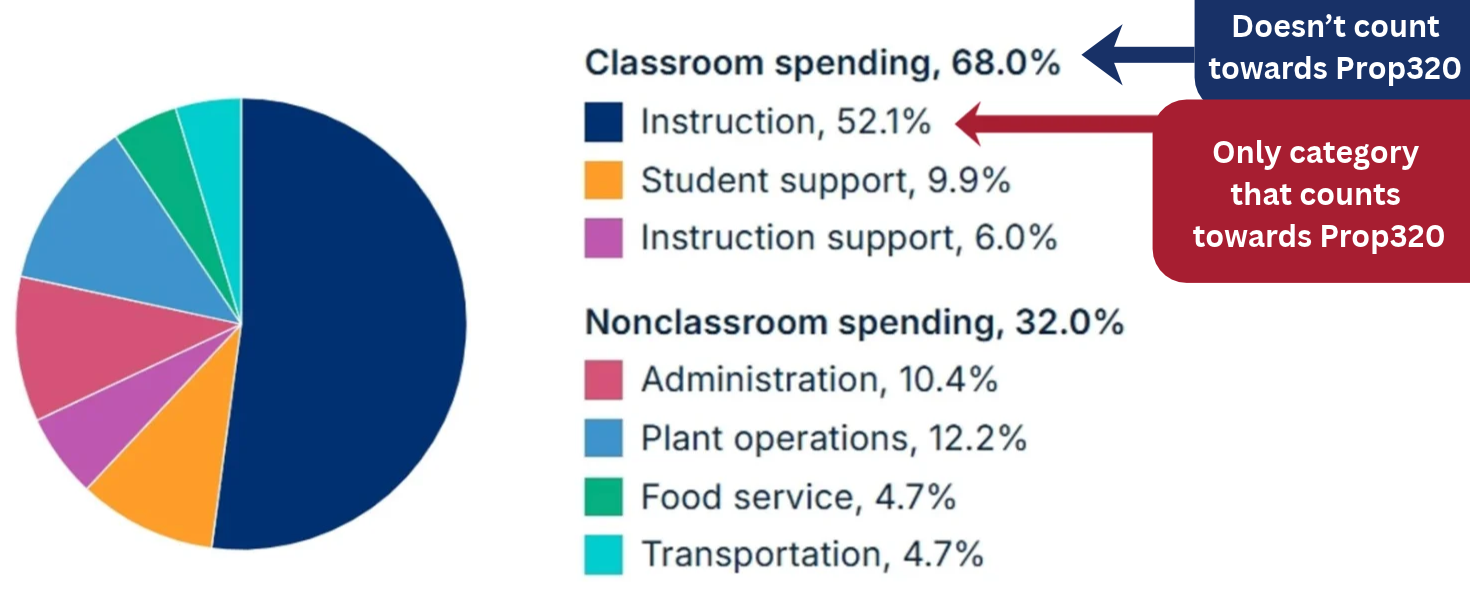
Classroom Spending Is Not the Same as “Instruction”
While the terms may sound similar, classroom spending and instruction are not the same.
Classroom spending is a broader measure that can include several categories of expenses that support students and the classroom. Instruction is one specific spending category within that broader measure.
Proposition 320’s proposed 60% requirement applies specifically to direct instructional expenses, not all expenses that may be included in classroom spending.
Why this matters: A district may report a classroom spending percentage above 60%, but that does not necessarily mean 60% of its operational spending would qualify as direct instructional expenses under Proposition 320.
This webpage is intended to provide factual information about Proposition 320, its requirements and potential implementation. These educational materials are designed to help Arizona school leaders and communities better understand the measure and do not advocate for a “yes” or “no” vote.
What Arizonans Need to Know

Proposition 320 could affect decisions governing boards make about how existing district resources are allocated. For districts affected by the measure, understanding where the district stands today can help board members prepare for what implementation could require.
As a community member, start by understanding:
- What counts and what doesn’t count towards the 60%
- Whether Proposition 320 would apply to your district
- Your district’s current classroom spending percentage
- How far your district is from the proposed 60% requirement
- What currently counts as direct instructional spending
- Which district expenses are currently classified outside direct instructional spending
- What happens if the annual spending requirement is not met
What Counts Toward the 60% Requirement?
Not every dollar a school district spends is currently classified as direct instructional spending.
Under current Auditor General classifications, the distinction includes:
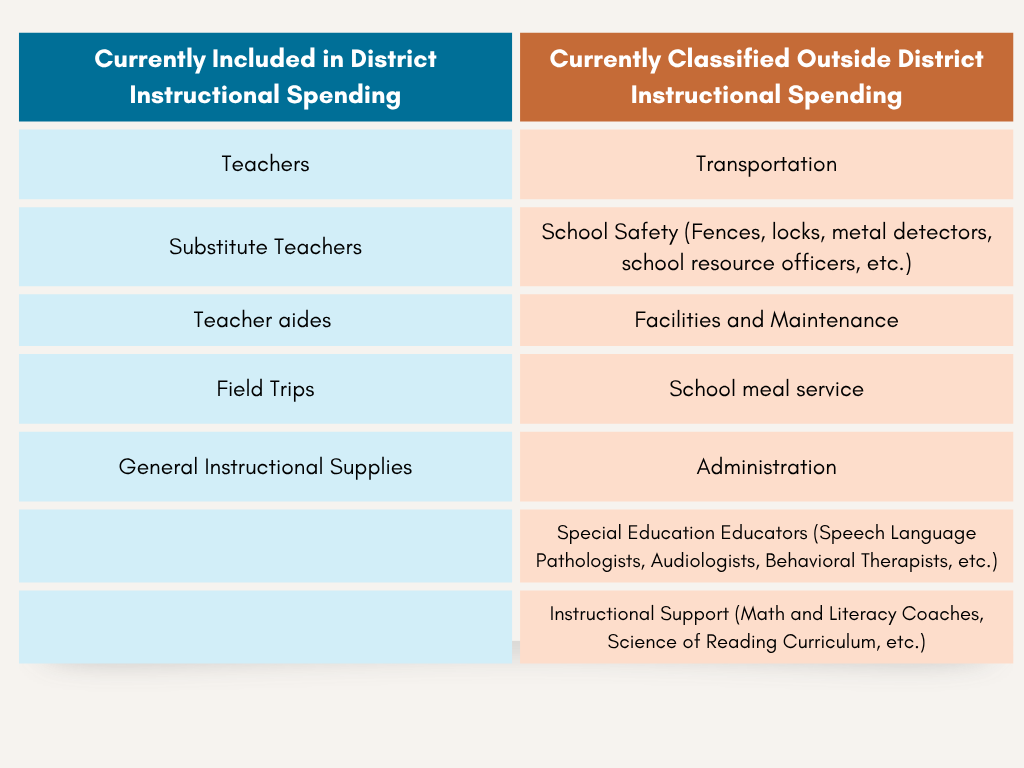
Examples of expenses currently classified outside direct instructional spending include school bus transportation, security measures, custodial services, building maintenance and certain special education and student-support personnel.
Why this matters for boards: If an affected district needs to increase the percentage allocated to direct instructional expenses, governing board members may need to consider how changes to other operational spending could affect district services.
Important to Know: These are current classifications. Proposition 320 directs the Arizona Auditor General to define “direct instructional expenses” and “operational spending” for purposes of implementing the measure.
What Happens if My District Does Not Meet the Annual Requirement?
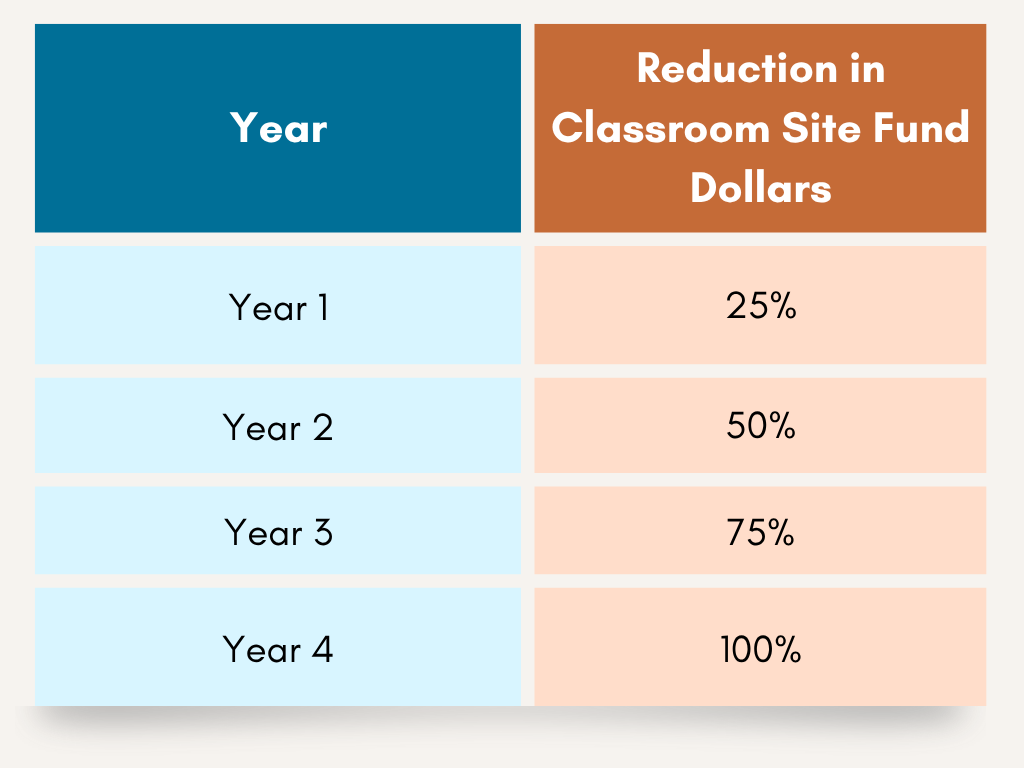
Under Proposition 320, affected school districts that don’t make the required progress toward spending 60% on direct instruction could lose a portion of their Classroom Site Fund (CSF) funding.
That means less money from a fund used to pay teachers and support programs that help students learn and succeed.
The funding reduction increases with each year of noncompliance:
Proposition 320 would allow the State Superintendent of Public Instruction to grant a waiver, or temporary exception to the requirement, to a school district that cannot meet its spending target. Districts would generally be limited to two waivers within a 10-year period.
This means school boards would need to closely track their district’s spending each year to avoid potential funding penalties.
Does Proposition guarantee increased Classroom Spending?
NO. Instruction is a narrow category within classroom spending, and districts may cut resources that are considered classroom spending in order to come into compliance with the mandate. Math and literacy coaches, special education specialists, curriculum such as science of reading are allowed to be cut in order to come into compliance with Prop 320.
If a district cuts services to meet the 60% requirement, does that mean more money will go toward teachers and direct instruction?
Does Proposition 320 guarantee increased teacher pay?
Does Proposition 320 Apply to My District?
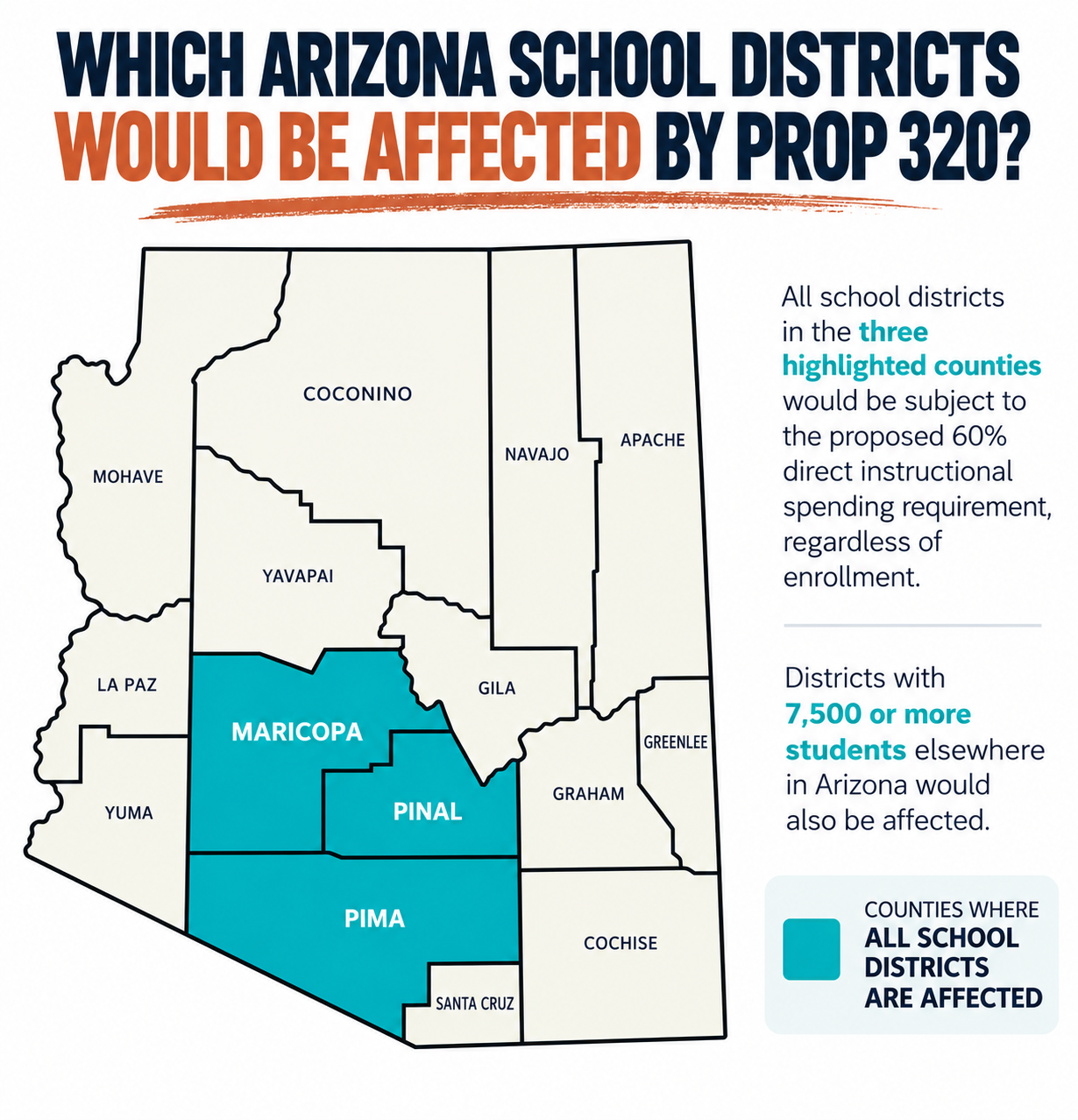
If approved, Proposition 320’s 60% spending requirement would apply if your district:
Has at least 7,500 students
OR
Is located in Maricopa, Pima or Pinal County, regardless of enrollment.
If neither applies to your district, it would not be subject to the 60% requirement described in this section of the measure.
What Would My District Be Required to Do?
Affected districts would be required to spend at least 60% of their operational spending on “direct instructional expenses.”
What if my district is below 60%?
It would not have to reach 60% all at once.
A district below the threshold would generally need to increase the percentage it spends on direct instructional expenses by at least 0.5 percentage points each year until reaching 60%.
For example: If an affected district is currently at 56%, it would generally need to reach at least 56.5% the following year and continue making the required annual increases until it reaches 60%.
If a district increases by more than the required amount in one year, the additional increase may count toward subsequent requirements.
See What Proposition 320 Could Mean for Your District
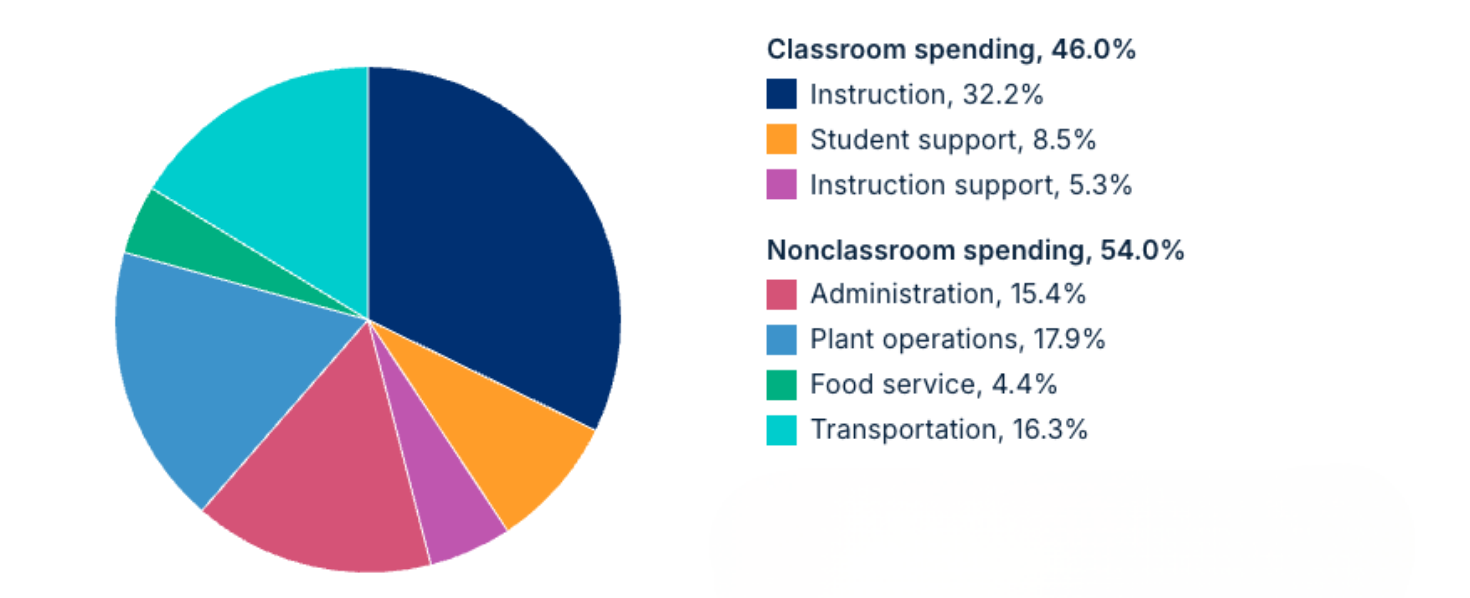
To meet the 60% direct instruction requirement, Baboquivari USD would need to cut spending in other areas and reallocate 27.8 percentage points of its budget toward direct instructional expenses.
BUSD spends 11.6% more than the state average on transportation to transport a student over 385 miles to and from school but would still be under the same spending requirement as urban school districts. BUSD may have to cut from their transportation budget to meet the 60% standard.
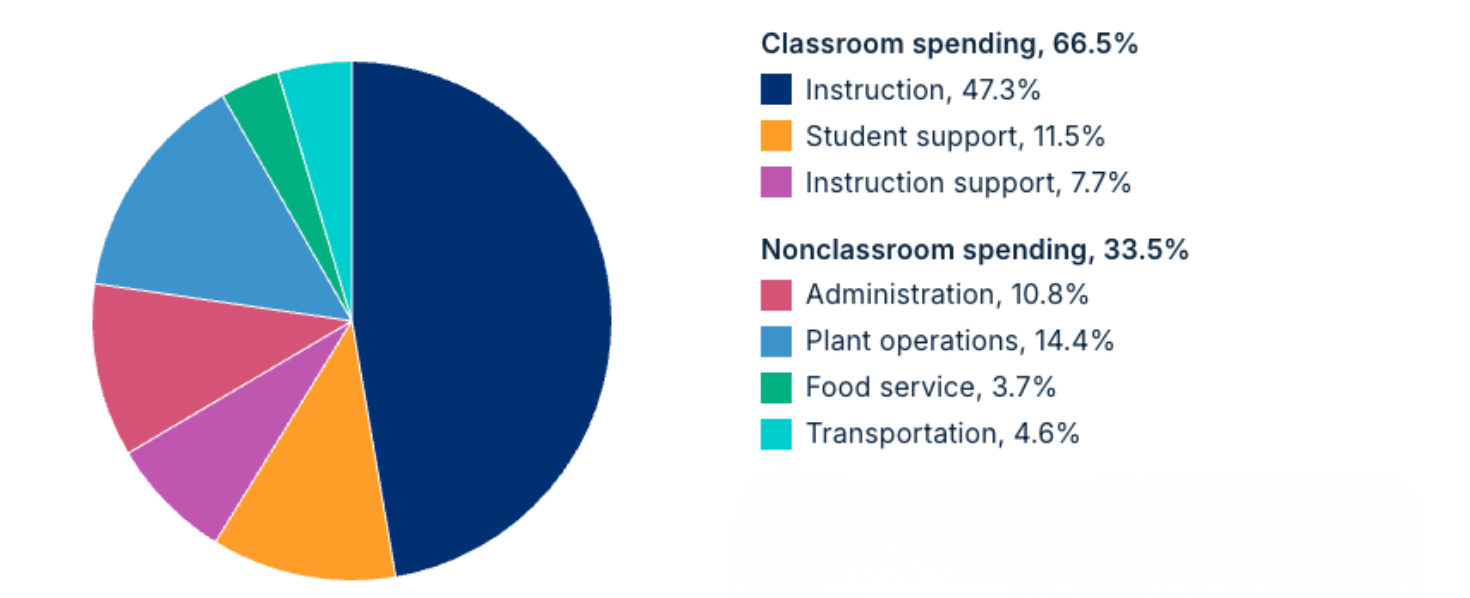
To meet the 60% direct instruction requirement, Phoenix UHSD would need to cut spending in other areas and reallocate 12.8 percentage points of its budget toward direct instructional expenses.
PUHSD could eliminate its entire administration budget and still fall significantly short of the requirement, thus needing to consider further cuts to other areas in the budget. t or remove this text inline or in the module Content settings. You can also style every aspect of this content in the module Design settings and even apply custom CSS to this text in the module Advanced settings.
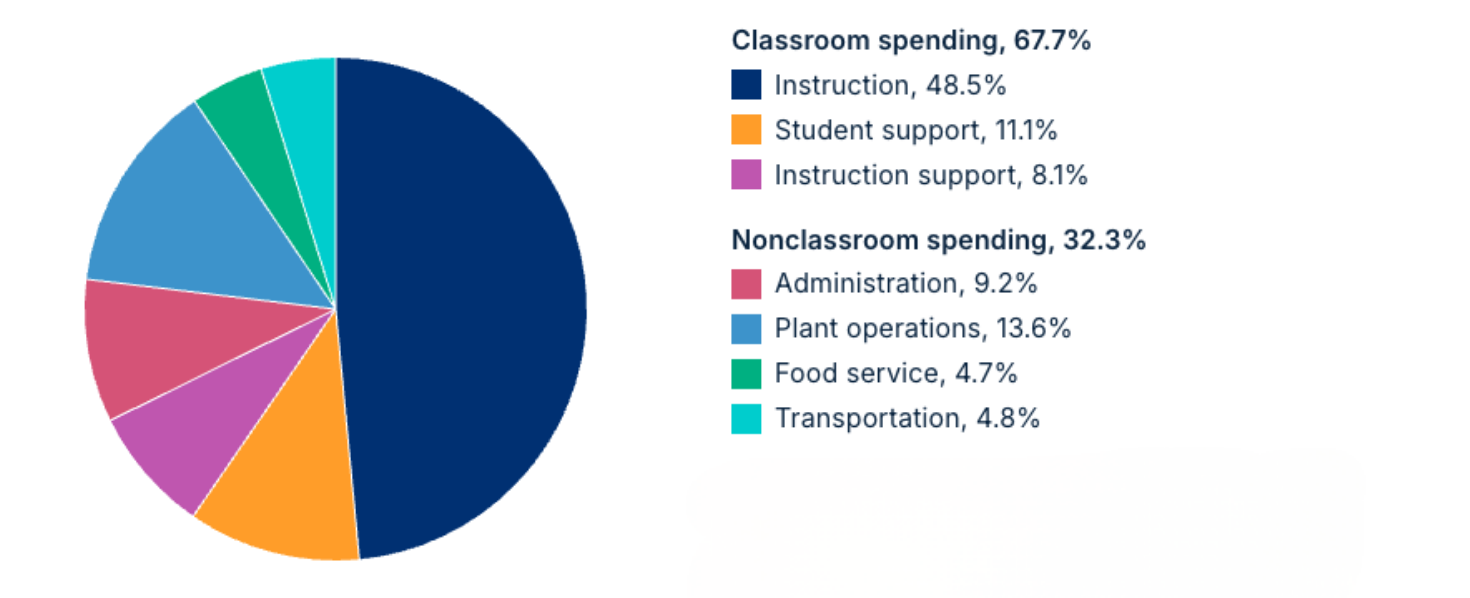
To meet the 60% direct instruction requirement, Tucson USD would need to cut spending in other areas and reallocate 11.5 percentage points of its budget toward direct instructional expenses.
TUSD spends less on administration than the state average but more in student and instruction support due to their higher special education student population.
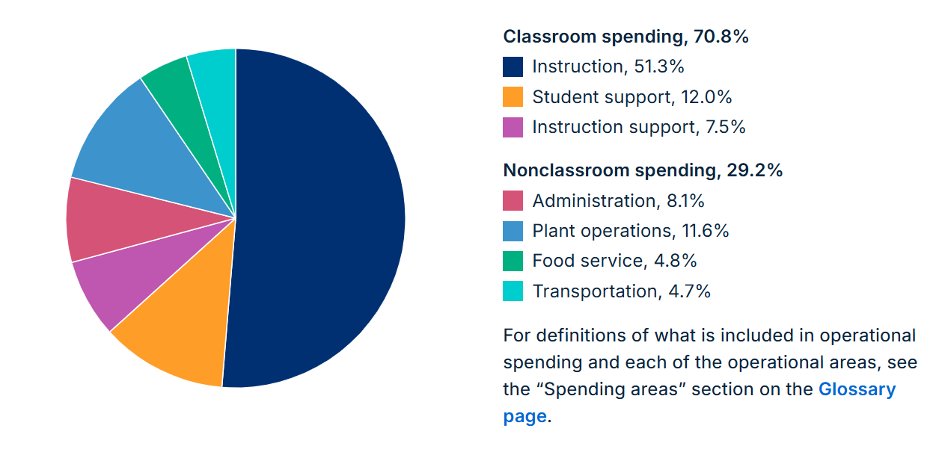
To meet the 60% direct instruction requirement, Mesa USD would need to cut spending in other areas and reallocate 8.7 percentage points of its budget toward direct instructional expenses.
MUSD has 20% more students with special needs than the state average and spend 21% more than the state average on student support. Mesa could also cut its entire administrative budget and still need to cut from other areas of the budget.
Step 1: Does the requirement apply to your district?
Determine whether your district has at least 7,500 students or is located in Maricopa, Pima or Pinal County.
Step 2: Where does your district stand today?
Look up your district’s current classroom spending percentage using the Arizona Auditor General’s School District Spending Dashboard.
Step 3: Compare your percentage with 60%.
If your district is affected and currently below 60%, the difference can help you understand how far your district is from the proposed requirement.
What Could Proposition 320 Mean for My District’s Budget?
Proposition 320 does not provide new funding specifically for districts to meet the 60% requirement.
For an affected district below 60%, this means meeting the annual requirement could involve reviewing how existing operational dollars are allocated between direct instructional spending and other district needs.
The specific impact would depend on the district’s current spending percentage, budget and the definitions ultimately established by the Auditor General.
Frequently Asked Questions for School Board Members
What information should my governing board request from district administration?
Board members may want to understand the district’s current classroom spending percentage, how far the district is from 60%, which expenditures currently fall within and outside direct instructional spending and what budget considerations could arise if annual increases are required.
Does the governing board decide what counts as direct instructional spending?
No. Proposition 320 directs the Arizona Auditor General to establish the definitions of “direct instruction expenses” and “operational spending.”
Could this affect district services outside the classroom?
The specific impact would depend on the district’s current spending and future budget decisions. Because no new funding is allocated specifically to meet the requirement, an affected district below 60% may need to review how existing operational resources are allocated.
Does a district below 60% have to reach 60% immediately?
No. An affected district below 60% would generally be required to increase its percentage by at least 0.5 percentage points each year until reaching 60%.
What happens if a district increases by more than 0.5 percentage points in a year?
The additional increase may be credited toward required increases in subsequent years.
Are waivers available?
Yes. The Superintendent of Public Instruction may grant waivers, with limits on the number that may be granted within a 10-year period.
Request an Informational Proposition 320 Presentation
Have Questions About What Proposition 320 Could Mean for Your District?
ASBA’s Governmental Relations team is available to provide an informational Proposition 320 presentation for school districts, organizations, PTA/PTO groups and other affiliated groups.
The presentation provides an overview of the measure, who it would apply to, the 60% requirement, current spending classifications and considerations specific to affected districts.